
𝗢𝗻𝗲 𝗰𝘂𝘀𝘁𝗼𝗺𝗲𝗿 𝗮𝗰𝘁𝗶𝗼𝗻. 𝗧𝗵𝗿𝗲𝗲 𝗱𝗶𝗳𝗳𝗲𝗿𝗲𝗻𝘁 𝗺𝗮𝗿𝗸𝗲𝘁𝗶𝗻𝗴 𝗮𝗿𝗰𝗵𝗶𝘁𝗲𝗰𝘁𝘂𝗿𝗲𝘀.
A customer makes a purchase. Simple event.
But what happens next?
In Marketing Cloud Next, that same action can lead to very different architectural patterns:
1. 𝗧𝗿𝗮𝗻𝘀𝗮𝗰𝘁𝗶𝗼𝗻𝗮𝗹:
The customer needs an immediate order confirmation.
→ 𝗢𝗻-𝗗𝗲𝗺𝗮𝗻𝗱 𝗙𝗹𝗼𝘄, invoked via API.
2. 𝗘𝘃𝗲𝗻𝘁-𝗱𝗿𝗶𝘃𝗲𝗻:
The purchase starts a post-purchase experience with decisions and follow-up actions.
→ 𝗔𝘂𝘁𝗼𝗺𝗮𝘁𝗶𝗼𝗻 𝗘𝘃𝗲𝗻𝘁-𝗧𝗿𝗶𝗴𝗴𝗲𝗿𝗲𝗱 𝗙𝗹𝗼𝘄.
3. 𝗔𝘂𝗱𝗶𝗲𝗻𝗰𝗲-𝗱𝗿𝗶𝘃𝗲𝗻:
Later, we want to engage customers who purchased Product X but haven’t purchased Product Y.
→ 𝗦𝗲𝗴𝗺𝗲𝗻𝘁 + 𝗦𝗲𝗴𝗺𝗲𝗻𝘁-𝗧𝗿𝗶𝗴𝗴𝗲𝗿𝗲𝗱 𝗙𝗹𝗼𝘄.
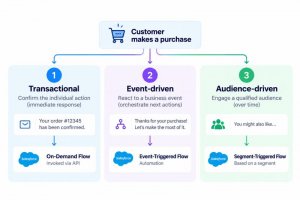
Same customer action. Very different requirements.
That’s why asking “What triggers the communication?” isn’t enough to choose the architecture.
We also need to understand:
☑️ How quickly must we respond?
☑️ Are we reacting to a transaction, a business event, or an audience state?
☑️ Do we need a single message or an orchestrated experience?
☑️ Where does the context come from?
𝗧𝗵𝗲 𝘁𝗿𝗶𝗴𝗴𝗲𝗿 𝘁𝗲𝗹𝗹𝘀 𝘂𝘀 𝘄𝗵𝗮𝘁 𝗵𝗮𝗽𝗽𝗲𝗻𝗲𝗱.
𝗧𝗵𝗲 𝗯𝘂𝘀𝗶𝗻𝗲𝘀𝘀 𝗶𝗻𝘁𝗲𝗻𝘁 𝘁𝗲𝗹𝗹𝘀 𝘂𝘀 𝘄𝗵𝗮𝘁 𝗮𝗿𝗰𝗵𝗶𝘁𝗲𝗰𝘁𝘂𝗿𝗲 𝘄𝗲 𝗻𝗲𝗲𝗱.
